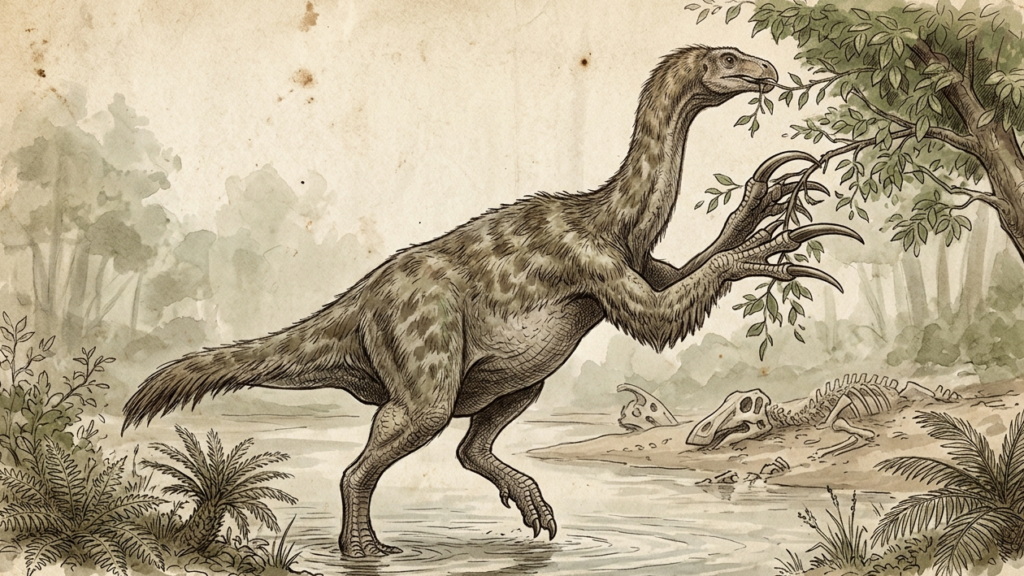
Imagine a dinosaur with claws longer than a pirate’s cutlass, capable of slicing through vegetation like a scythe through wheat. Therizinosaurus, the ultimate gardening tool of the Cretaceous, roamed what is now Mongolia around 70 million years ago. Discovered in 1948 during a joint Soviet-Mongolian expedition in the Gobi Desert’s Nemegt Formation, its massive, scythe-like claws initially baffled paleontologists who named it in 1954 after the Greek words for ‘reaper’ and ‘lizard’.
Standing taller than a giraffe with a pot-bellied body, long neck, and those iconic one-meter-long claws on each hand, Therizinosaurus was a theropod dinosaur that flipped the script on its meat-eating relatives. Unlike T-Rex, this giant was a peaceful herbivore, using its claws to pull down branches and strip leaves. Recent discoveries of related Therizinosaurs show they had feathers, a potbelly for fermenting plants, and even backward-facing teeth perfect for grinding tough vegetation.
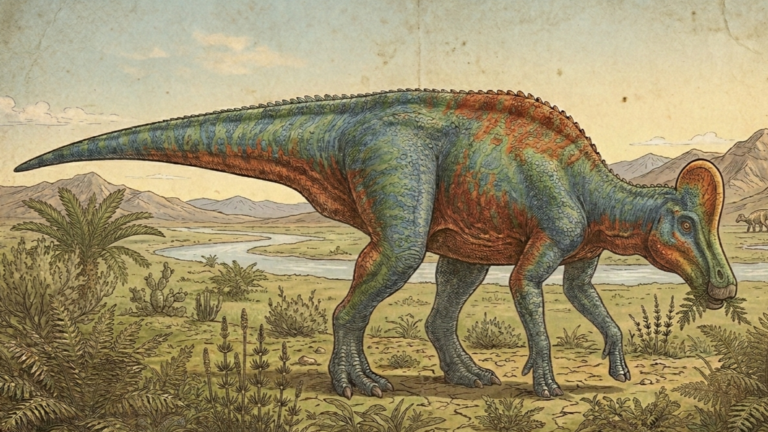
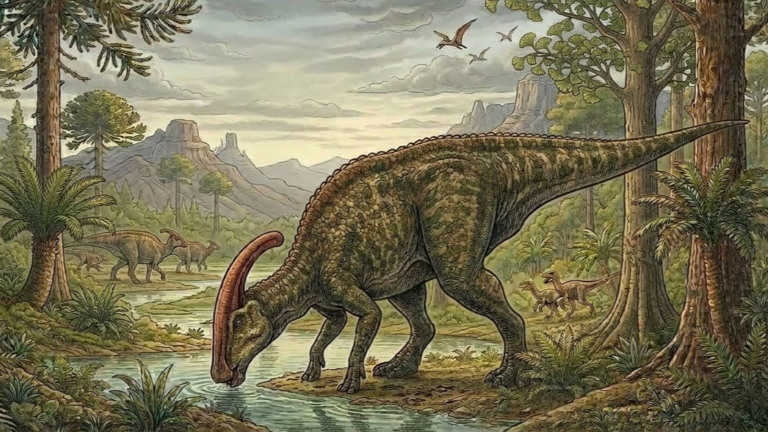
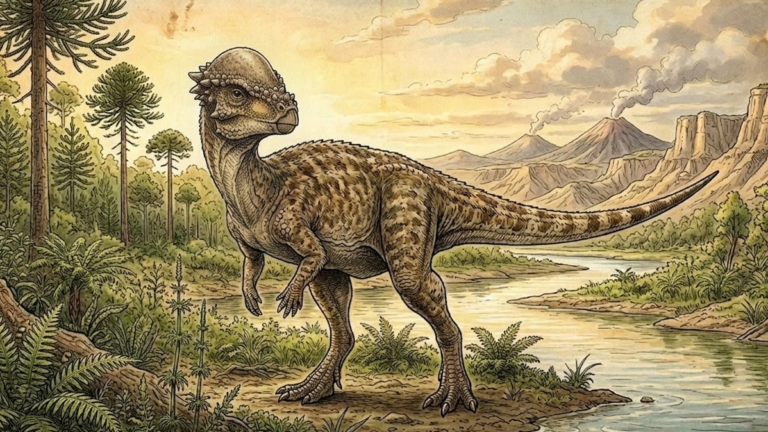
The Nemegt Formation, a lush floodplain environment with rivers and forests, provided the perfect buffet for this bizarre beast. Fossils reveal Therizinosaurus lived alongside duck-billed hadrosaurs and tyrannosaurs, yet its size and claws likely deterred predators. Ongoing research, including new specimens from Mongolia and China, continues to uncover more about this enigmatic ‘sloth of dinosaurs,’ reshaping our understanding of Cretaceous ecosystems.