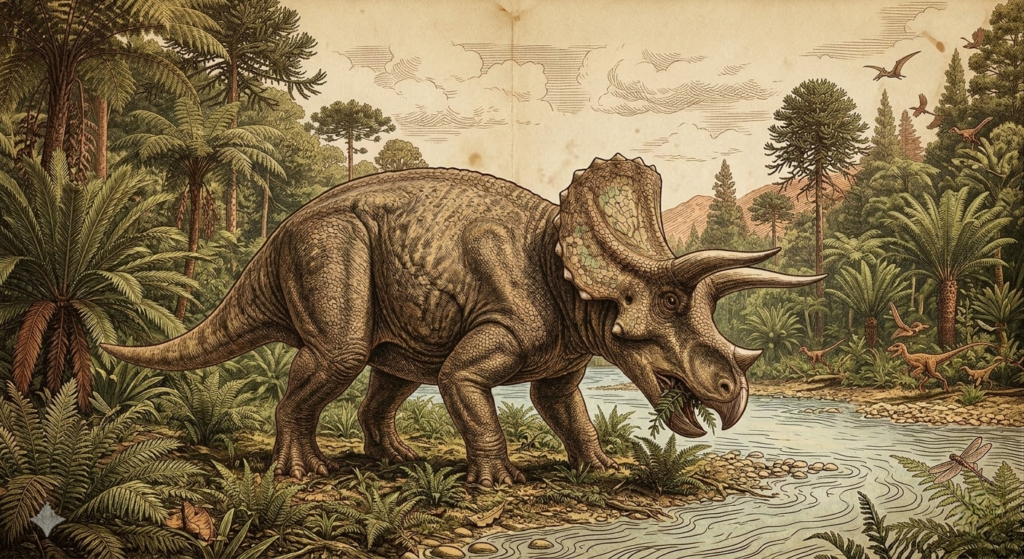
Picture a colossal beast charging across ancient floodplains, its three razor-sharp horns gleaming under the Cretaceous sun. Triceratops, the iconic three-horned dinosaur, ruled the late Mesozoic with unmatched ferocity and defense.
Discovered in the late 19th century, the first Triceratops fossils were unearthed in Wyoming by John Bell Hatcher in 1887. Paleontologist Othniel Charles Marsh formally named it in 1889 from a partial skull, sparking a naming war during the Bone Wars with rival Edward Drinker Cope. Thousands of specimens have since been found, making Triceratops one of the most abundant dinosaurs in the Hell Creek Formation.
This herbivore munched on tough ferns, cycads, and low-lying plants using its beak-like mouth and shearing teeth. Its massive frill and horns likely served for defense against predators like Tyrannosaurus rex, with fossil evidence showing healed bite marks from tyrannosaur attacks. Some specimens even preserve skin impressions, revealing a spiky, armored hide.
Triceratops lived right up to the end-Cretaceous extinction 66 million years ago, vanishing in the asteroid impact catastrophe. Recent studies suggest possible species variations and even evidence of intra-species combat from horn damage, painting a picture of a dynamic, combative world of giants.