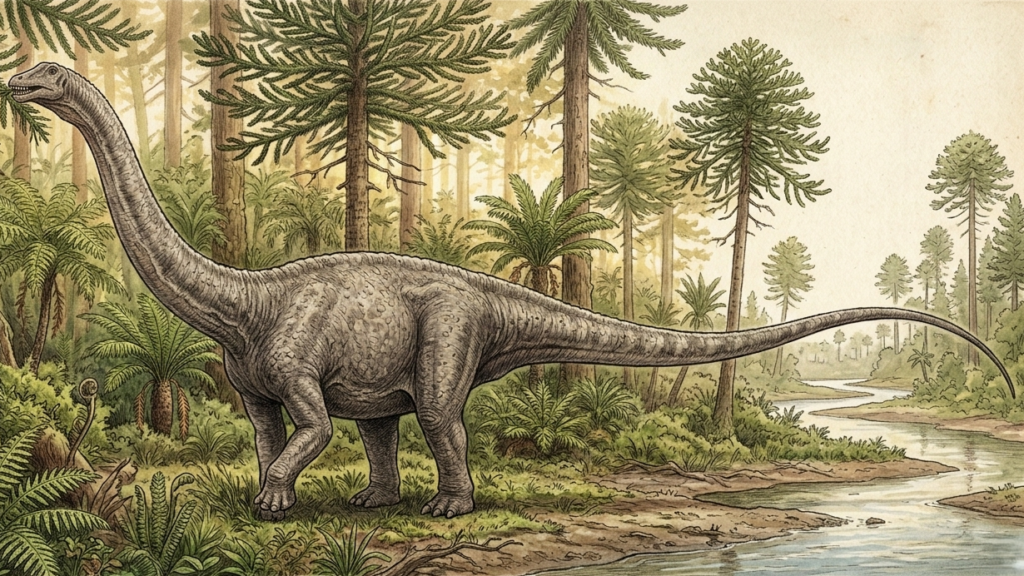
Picture a creature so enormous its tail alone measured nearly half a basketball court. Meet Diplodocus, the sauropod superstar of the Late Jurassic whose whip-like tail could have snapped at supersonic speeds, stunning predators from afar.
Discovered in 1877 by Samuel Wendell Williston near Canon City, Colorado, in the rich fossil beds of the Morrison Formation, Diplodocus was officially named in 1878 by famed paleontologist Othniel Charles Marsh. He chose the name from Greek words meaning ‘double beam’ due to the unique paired chevron bones supporting its extraordinary tail. This discovery ignited the ‘Bone Wars’ rivalry between Marsh and Edward Drinker Cope, leading to a frenzy of fossil hunting that unveiled dozens of sauropod skeletons.
Reaching lengths of 80 feet, Diplodocus likely used its long neck to browse treetops while standing on all fours, or even reared up on hind legs for higher leaves, according to biomechanical studies. Its peg-like teeth were perfect for stripping branches bare. The Carnegie Museum in Pittsburgh houses the most complete skeleton, nicknamed ‘Dippy,’ which has inspired museum-goers worldwide for over a century.
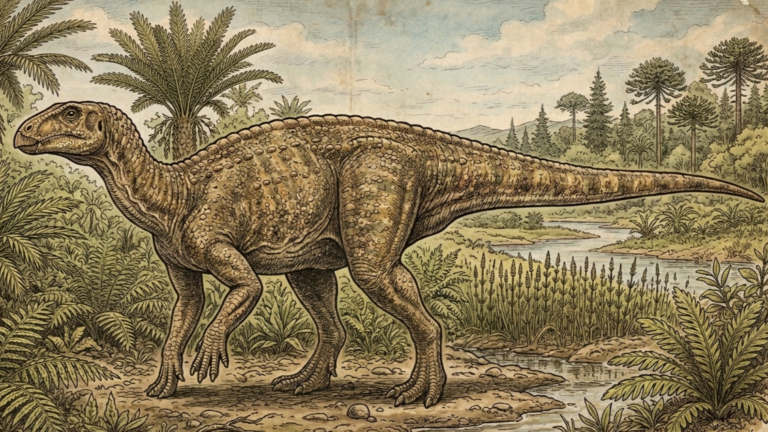
Recent analyses of skin impressions reveal a scaly hide similar to modern crocodiles, colored in mottled grays and browns for camouflage among the conifer forests. Diplodocus reminds us of a world where gentle giants ruled the floodplains, their thunderous steps echoing through prehistoric valleys.