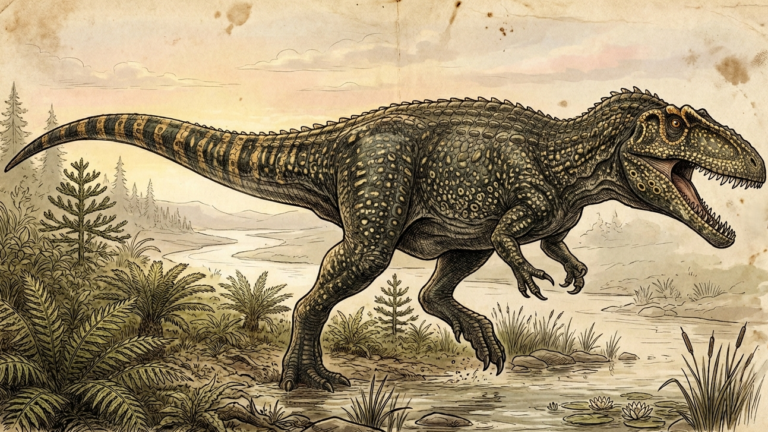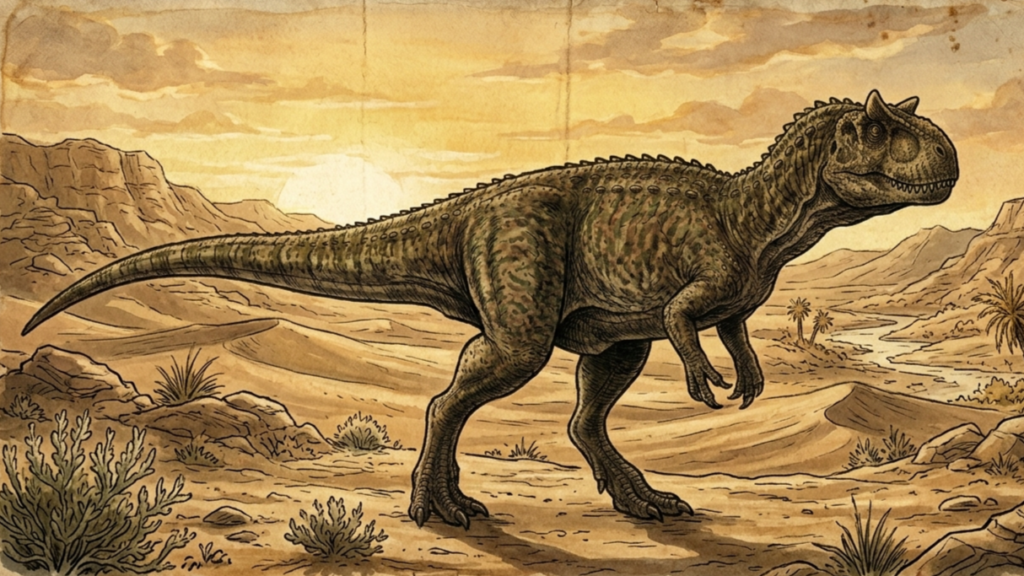
Picture this: a massive predator with a crown-like horn on its nose, stalking the floodplains of ancient India just before the asteroid hit. Rajasaurus narmadensis, meaning ‘ruler lizard of the Narmada,’ was a true apex predator of the Late Cretaceous.
Discovered in 1983 by geologist S.L. Jain near the Narmada River in Madhya Pradesh, India, its partial skeleton was formally described in 2003 by a team including Jeffrey Wilson and Ashok Sahni. This find was groundbreaking, as few meat-eating dinosaurs from the end of the Cretaceous have been found in India.
Measuring about 30 feet long and weighing around 4 tons, Rajasaurus had a robust build, powerful hind legs, and comically small forelimbs reminiscent of T. rex. But what sets it apart is the prominent bony boss on its snout, possibly used for display, combat, or even head-butting rivals, suggesting a more aggressive lifestyle.
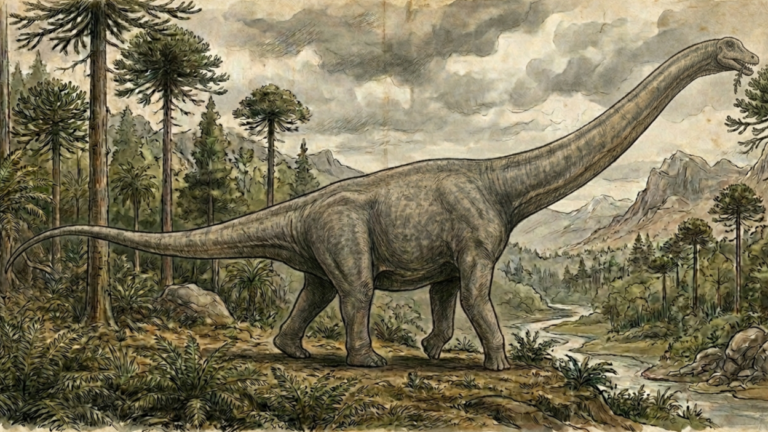
Rajasaurus belonged to the abelisaurid family, dominant carnivores in the southern continents. It shared its world with enormous titanosaurs, feasting on the giants that roamed central India’s lush environments. This discovery sheds light on dinosaur diversity right up to the mass extinction 66 million years ago.