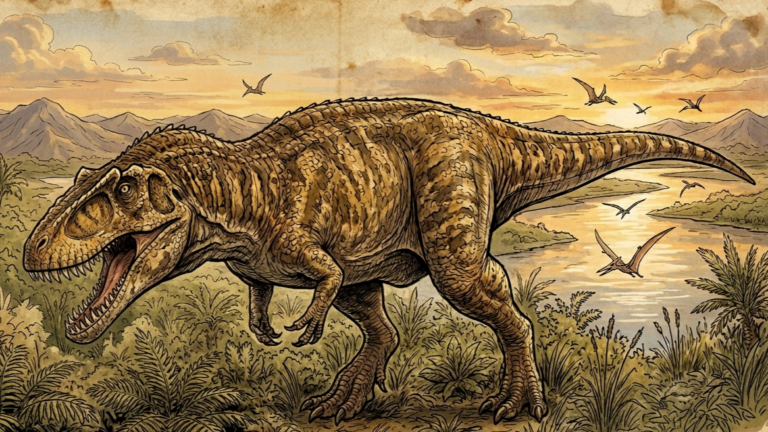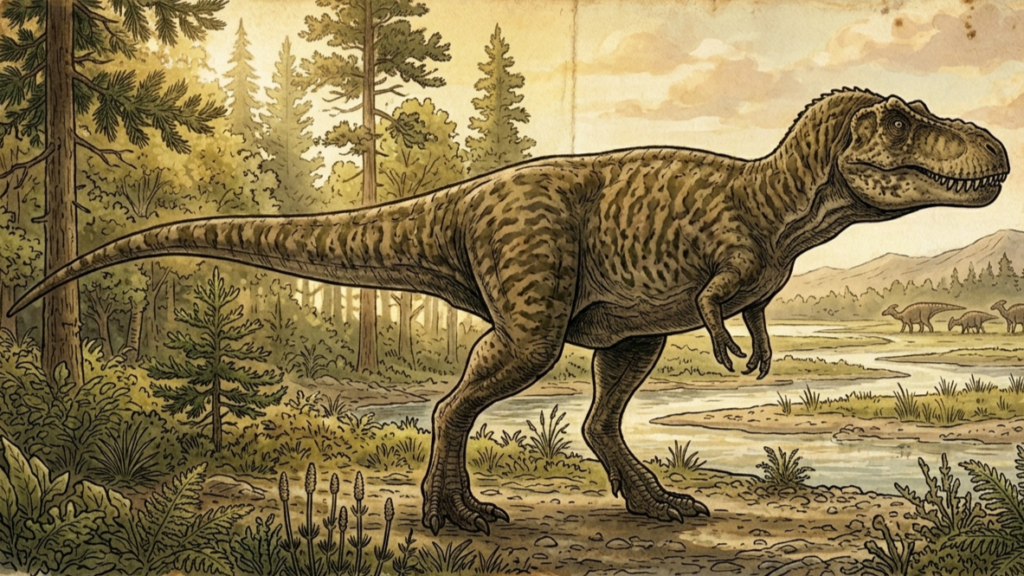
Imagine a beast so ferocious it could crush bones with a bite force rivaling the king of dinosaurs himself. Meet Tarbosaurus bataar, the Asian terror that ruled the floodplains of ancient Mongolia 70 million years ago.
Discovered in the dusty badlands of the Gobi Desert during Soviet-Mongolian expeditions in the 1940s, Tarbosaurus was formally named in 1955 by paleontologist Evgeny Maleev. This giant theropod, a close cousin to Tyrannosaurus rex, measured up to 40 feet long and weighed around 5 tons. Unlike its North American relative, Tarbosaurus thrived in lush river valleys teeming with prey like hadrosaurs and sauropods.
What makes Tarbosaurus truly captivating are its pristine fossils. One famous specimen, a subadult skull, bears deep bite marks from another Tarbosaurus, suggesting fierce territorial battles. In 2013, a nearly complete ‘Khan’ specimen smuggled out of Mongolia made headlines when it was repatriated after a legal battle, highlighting the dinosaur’s cultural significance. With large eyes granting binocular vision for precise hunting, Tarbosaurus was a apex predator perfectly adapted to its environment.
Recent studies reveal Tarbosaurus grew rapidly, reaching adulthood in just 18 years, and its brain was large for a tyrannosaurid, indicating high intelligence. These revelations continue to unlock the secrets of this prehistoric powerhouse.