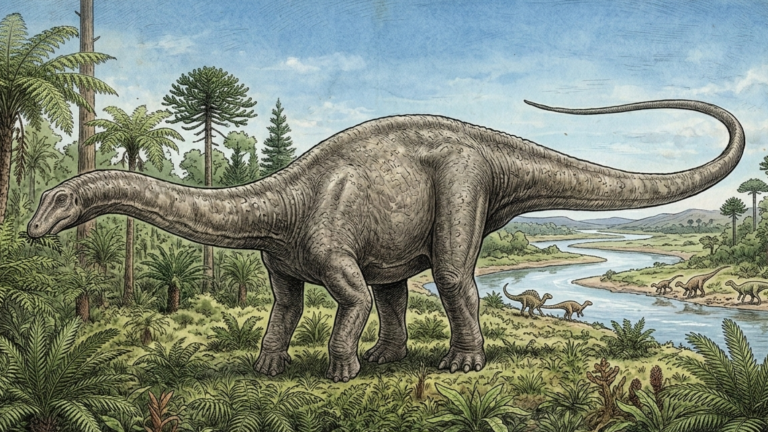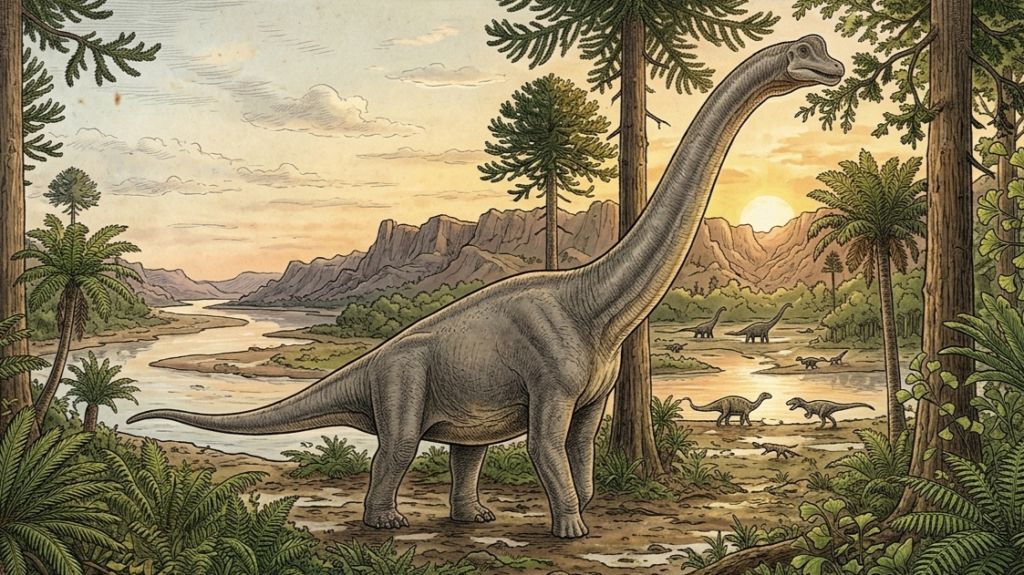
Picture a colossal creature towering over the landscape, its front legs longer than its hind, allowing it to browse the highest treetops like a prehistoric giraffe on steroids. That’s Brachiosaurus, one of the most iconic dinosaurs ever discovered.
In 1900, paleontologist Elmer S. Riggs unearthed the first Brachiosaurus skeleton near Fruita, Colorado, naming it Brachiosaurus altithorax for its deep chest cavity and robust arms. Unlike the more famous Diplodocus found nearby, Brachiosaurus had a unique body plan with elevated shoulders, making it one of the tallest dinosaurs known. Its partial skeletons revealed a sauropod adapted for high browsing in the lush floodplains of the Morrison Formation.
Recent studies suggest Brachiosaurus lived in small herds, migrating across river valleys abundant with conifers, ferns, and cycads. Footprint discoveries in Wyoming provide evidence of its locomotion, showing a pillar-like gait perfect for supporting its massive bulk. While no complete skeletons exist, comparisons with relatives like Giraffatitan confirm its enormous scale and gentle, plant-munching lifestyle.
Brachiosaurus continues to captivate with its blend of grace and gigantism, reminding us of a world where giants ruled the Earth.