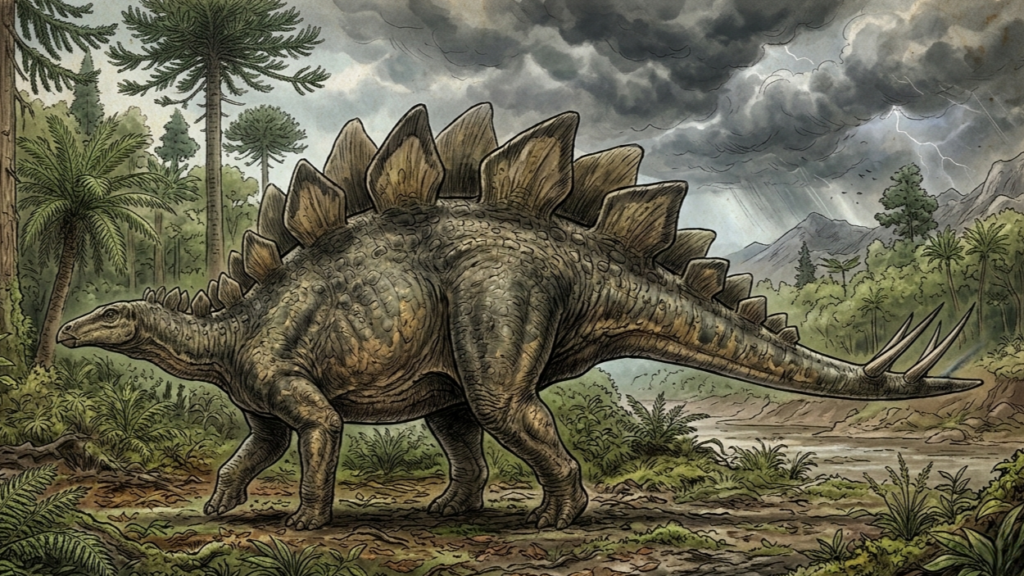
Picture a towering herbivore striding across ancient floodplains, its back adorned with enormous, kite-shaped bony plates that shimmered in the Jurassic sun, and a tail armed with four sharp spikes capable of impaling predators. This is Stegosaurus, one of the most recognizable dinosaurs ever discovered.
The first Stegosaurus fossils were unearthed in 1876 by quarry worker Marshal P. Felch in Colorado, USA, during the famous Bone Wars between rival paleontologists. Othniel Charles Marsh formally named the genus in 1877 based on these finds from the Morrison Formation. Early reconstructions depicted it with plates sticking out sideways like a stegosaurus stereotype, but modern evidence shows they alternated along the back in pairs.
Those iconic plates likely served multiple purposes, from regulating body temperature by absorbing or radiating heat to dazzling potential mates with colorful displays. The tail spikes, affectionately called thagomizers after a Far Side comic by Gary Larson, packed a powerful punch; studies suggest they could puncture flesh deeply. Despite a brain no bigger than a golf ball, a cluster of nerves in its hips may have controlled hind leg reflexes and digestion.
Stegosaurus roamed lush river valleys munching ferns, horsetails, and cycads with its beak-like mouth and small, grinding teeth. Recent skin fossil discoveries reveal a pebbly, armored texture similar to modern crocodiles. This gentle giant dominated its ecosystem until its extinction around 150 million years ago, leaving a legacy etched in stone and popular imagination.