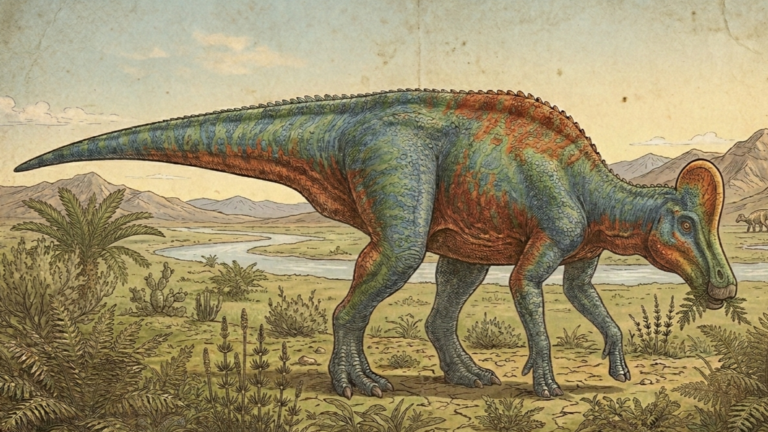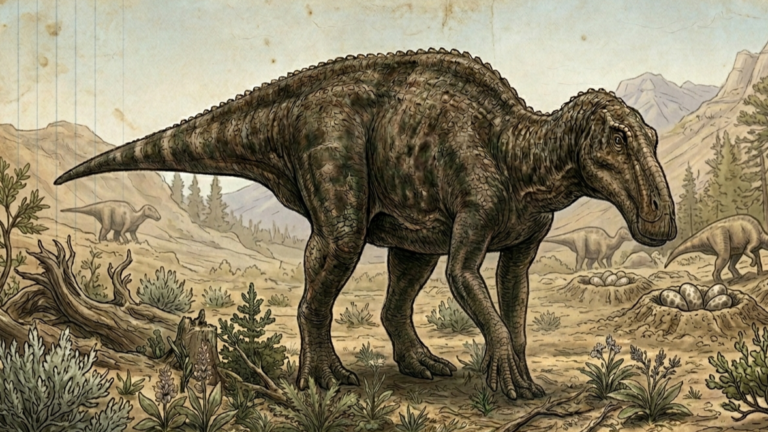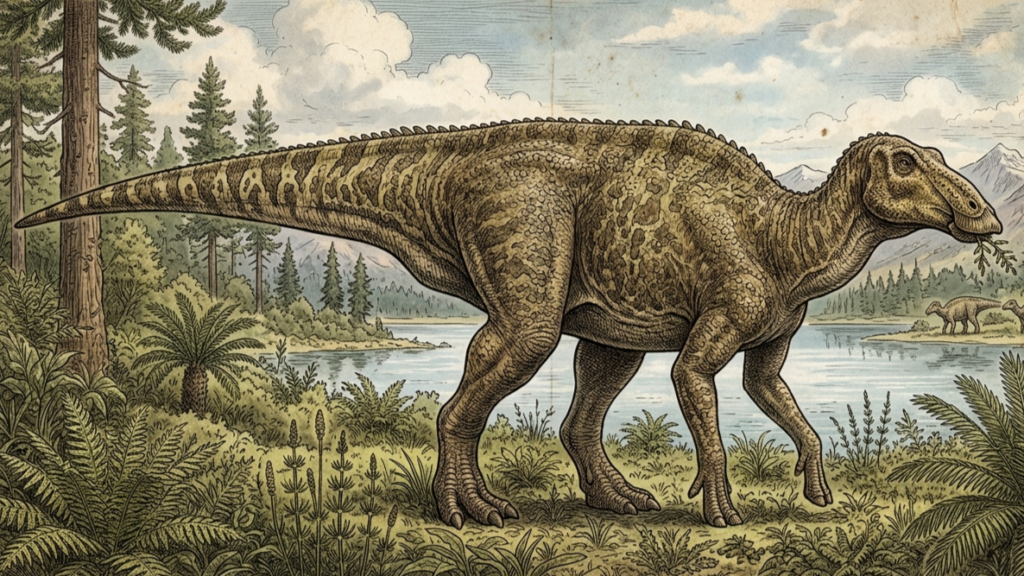
Imagine a duck-billed behemoth towering over the lush floodplains of Late Cretaceous North America, its massive frame shaking the earth with every step. This is Edmontosaurus, a gentle giant that could grow up to 43 feet long and weigh as much as four tons.
First unearthed in the Edmonton Formation of Alberta, Canada, by paleontologist Lawrence Lambe in 1917, Edmontosaurus was named for the rocky layers that preserved its bones. Lambe described the type species E. regalis from nearly complete skeletons, while another species, E. annectens, came from the Hell Creek Formation in the United States. These discoveries painted a picture of a widespread hadrosaur thriving right up to the asteroid impact.
What sets Edmontosaurus apart are its exquisitely preserved ‘mummies,’ like the famous AMNH 5060 specimen discovered in 1908. These reveal pebbly skin textures, a broad flattening bill for grazing, and powerful legs for quick escapes. It boasted hundreds of teeth in dental batteries to grind tough plants, and some specimens bear scars from tyrannosaur attacks, hinting at a life full of drama.
Modern research, including CT scans and studies of gut contents, shows Edmontosaurus lived in vast herds on coastal plains, browsing ferns, cycads, and conifers. Its legacy endures, offering key insights into the final chapter of the dinosaur era.