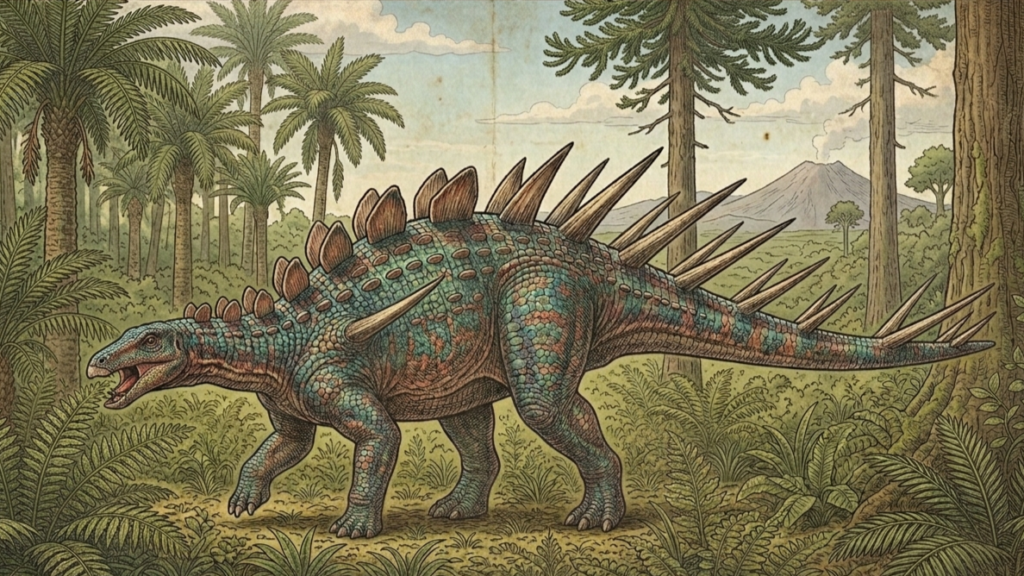
Picture a dinosaur bristling with spikes longer than your forearm, ready to whip its tail at any approaching threat. This is Kentrosaurus, the spiny sentinel of the Late Jurassic.
Unearthed in Tanzania’s Tendaguru Formation during early 20th-century German expeditions, Kentrosaurus was formally named in 1915 by paleontologist Edwin Hennig. Its skeleton reveals a distinctive armor setup: small, paired plates running from the neck to the shoulders, transitioning into long, sharp spikes along the hips and tail. This configuration likely served as a powerful defense mechanism against predators like Allosaurus relatives.
Measuring up to 15 feet long and weighing around a ton, this herbivore browsed on low-lying ferns and cycads in lush, subtropical forests about 155 to 150 million years ago. Modern analyses of its spikes suggest they could inflict serious wounds, highlighting Kentrosaurus as a formidable survivor in a dangerous world.
Kentrosaurus showcases the ingenuity of dinosaur evolution, blending plated protection with lethal weaponry in one compact package.