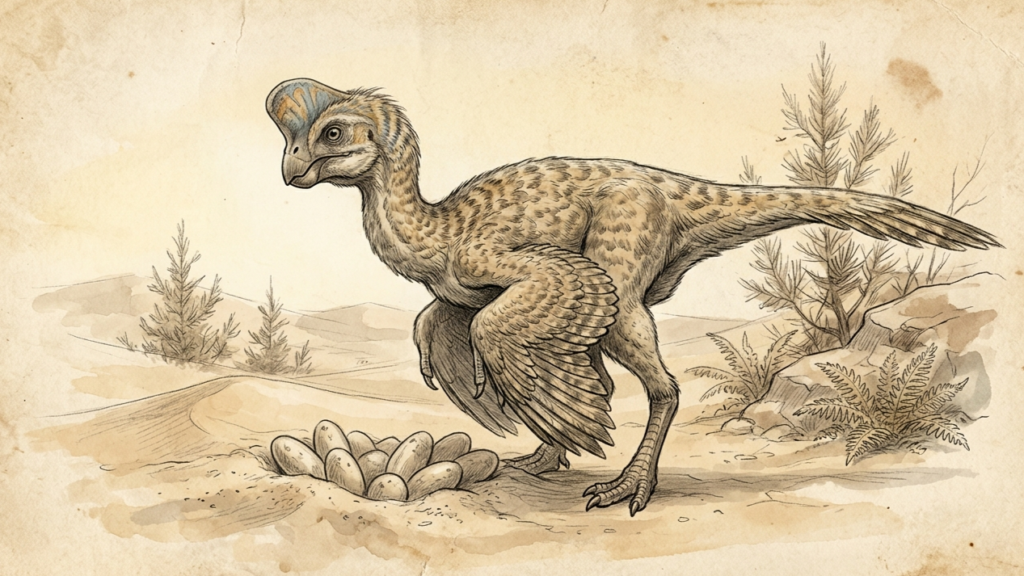
Picture a small, crested dinosaur tenderly brooding a nest of eggs amid the scorching sands of ancient Mongolia. This captivating scene belongs to Oviraptor, the misunderstood ‘egg thief’ of the Late Cretaceous.
In 1923, during Roy Chapman Andrews’ expedition to the Gobi Desert, the first Oviraptor skeleton was unearthed atop a clutch of eggs. Paleontologist Henry Fairfield Osborn named it Oviraptor philoceratops, meaning ‘egg seizer that loves ceratopsians,’ assuming it had raided a Protoceratops nest. This dramatic discovery fueled tales of dino drama for decades.
Fast forward to 1993. A joint Mongolian-Japanese team found an even more remarkable fossil: an Oviraptorid embryo inside an egg, and another adult brooding a nest with embryos matching its own kind. Far from a villain, Oviraptor was a devoted parent, showcasing bird-like behaviors millions of years before birds dominated the skies.
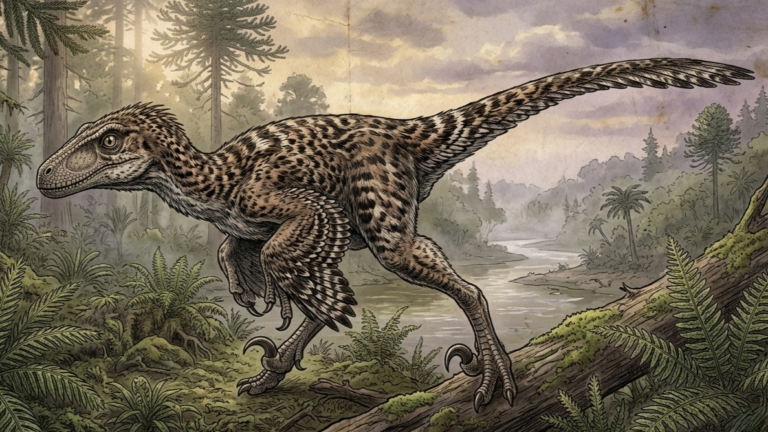
Slightly larger than a turkey, with a parrot-like beak, tall crest, and likely feathers in desert camouflage tones, Oviraptor roamed the Djadochta Formation. Its omnivorous diet included seeds, small vertebrates, and yes, eggs. These revelations continue to reshape our understanding of dinosaur family life.