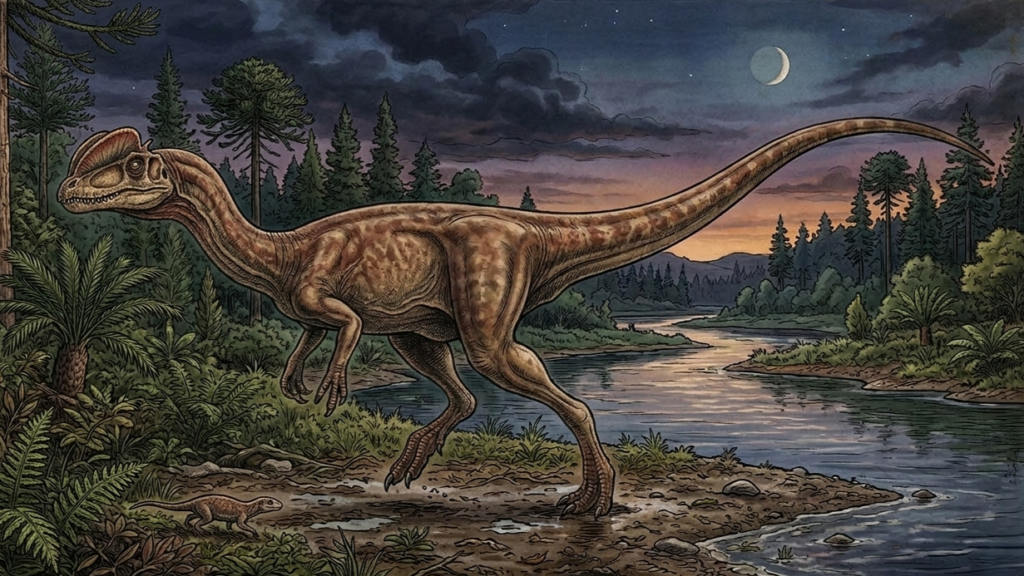
Imagine a sleek predator with not one, but two vibrant crests crowning its skull, striding through ancient riverbeds in search of prey. Meet Dilophosaurus, one of the earliest large carnivorous dinosaurs known to science.
Discovered in 1940 by Navajo rancher Jesse Williams near Fort Apache, Arizona, the first skeletons were unearthed from the Kayenta Formation. Initially misidentified with a single crest and named Monolophosaurus, it was correctly recognized as having dual thin, blade-like crests by paleontologist Samuel Welles in 1970, earning its true name meaning ‘two-crested lizard.’ These fragile crests, possibly covered in keratin or colorful displays, might have served for species recognition or attracting mates, much like modern birds.
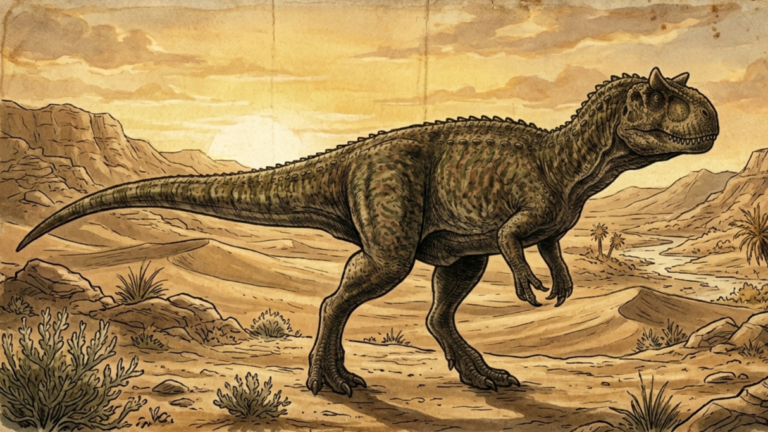
Standing about 20 feet long, Dilophosaurus was a formidable hunter with powerful jaws lined with serrated teeth. Fossil evidence from its vertebrae shows deep bite marks from another Dilophosaurus, suggesting fierce intra-species combat or cannibalism. Recent discoveries in China hint at a wider range across Pangaea, refining our understanding of early Jurassic ecosystems.
Despite its Hollywood fame in Jurassic Park with a fictional frill and venom-spitting, real Dilophosaurus was a swift, agile theropod, likely ambushing smaller dinosaurs and scavenging. Its lightweight build and long tail made it a agile runner in arid floodplains teeming with early reptiles.