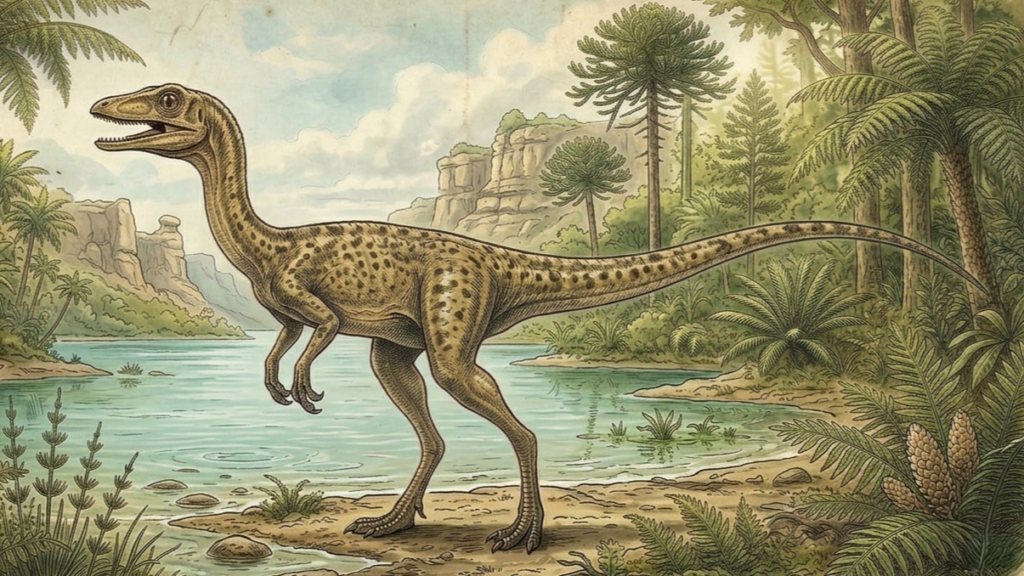
Imagine a dinosaur no bigger than a chicken, yet a fierce predator darting through Jurassic lagoons. Compsognathus, one of the smallest known dinosaurs, captured the imagination of paleontologists since its discovery over 160 years ago.
Unearthed in 1859 from the famous Solnhofen limestone quarries in Bavaria, Germany, by quarry worker Johann A. Bauernfeind, the first skeleton was described and named by naturalist Johann Philipp Wagner. This exquisitely preserved specimen, measuring just under a meter long, even revealed a lizard in its belly, proving its carnivorous habits. A second, even better-preserved specimen found in France in 1972 showed fine details like skin impressions and a fish in the stomach of a related juvenile.
Often compared to a modern roadrunner or turkey, Compsognathus was a swift bipedal theropod with long legs, a slender body, and a long tail for balance. Belonging to the Compsognathidae family, it represents an early coelurosaur, closely related to the lineage leading to birds. Recent studies suggest its relatives, like Sinosauropteryx, had feathers, hinting that this tiny hunter might have sported a fluffy coat.
These pint-sized dynamos remind us that size isn’t everything in the prehistoric world. Compsognathus thrived in shallow lagoons 150 million years ago, snatching insects, small lizards, and even baby dinosaurs, showcasing the diversity of Jurassic life.