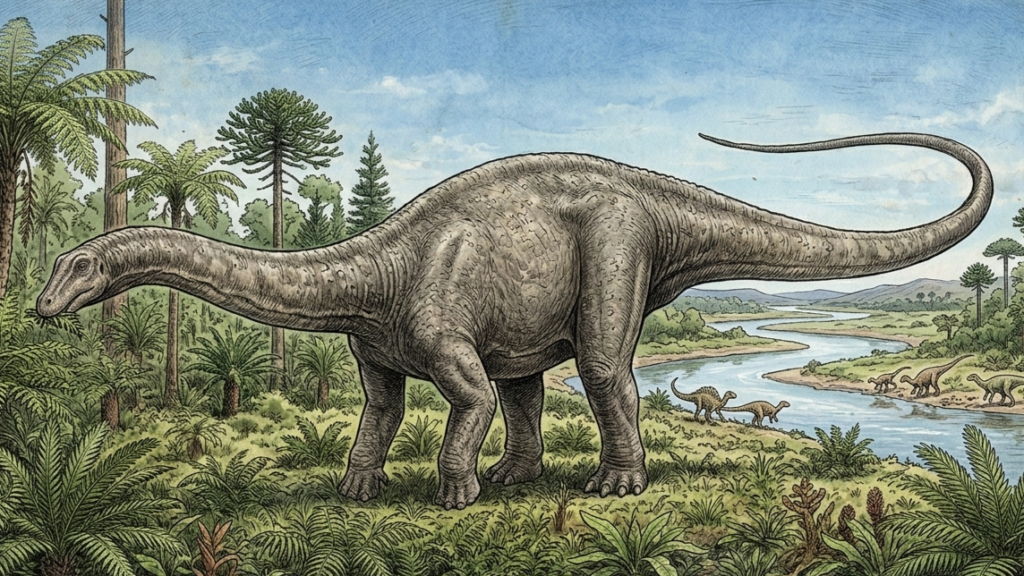
Picture this: a colossal sauropod whose bones were so misleading they bore the name Apatosaurus, meaning ‘deceptive lizard.’ Unearthed in 1879 by Othniel Charles Marsh amid the fierce Bone Wars in Colorado’s Morrison Formation, this dinosaur sparked one of paleontology’s greatest naming controversies.
Stretching up to 75 feet long and tipping the scales at 25 tons, Apatosaurus dominated Late Jurassic floodplains. Its whip-like tail could crack like a bullwhip, possibly deterring predators, while chisel-like teeth stripped branches of leaves, ferns, and cycads in a diet perfectly tuned for its massive size.
Modern research paints a dynamic picture. Air-filled sacs lightened its enormous body, allowing efficient movement. Neck posture debates suggest it foraged low to mid-level vegetation with a horizontal neck. Skin impressions reveal a textured hide, and ongoing digs uncover herds that thundered across ancient landscapes.
Apatosaurus endures as a symbol of sauropod supremacy, with museums displaying its skeletons drawing millions. Recent studies even fuel the Brontosaurus revival, but Apatosaurus stands firm as a true prehistoric titan.