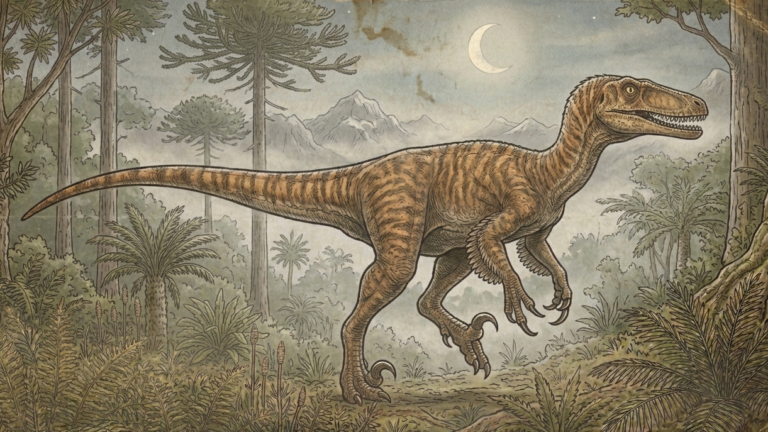
Picture this: a nimble, bird-like killer with a foot-long sickle claw, leaping onto the flanks of a lumbering giant and tearing it apart. Meet Deinonychus, the real raptor that inspired Jurassic Park’s velociraptors and changed how we see dinosaurs forever.
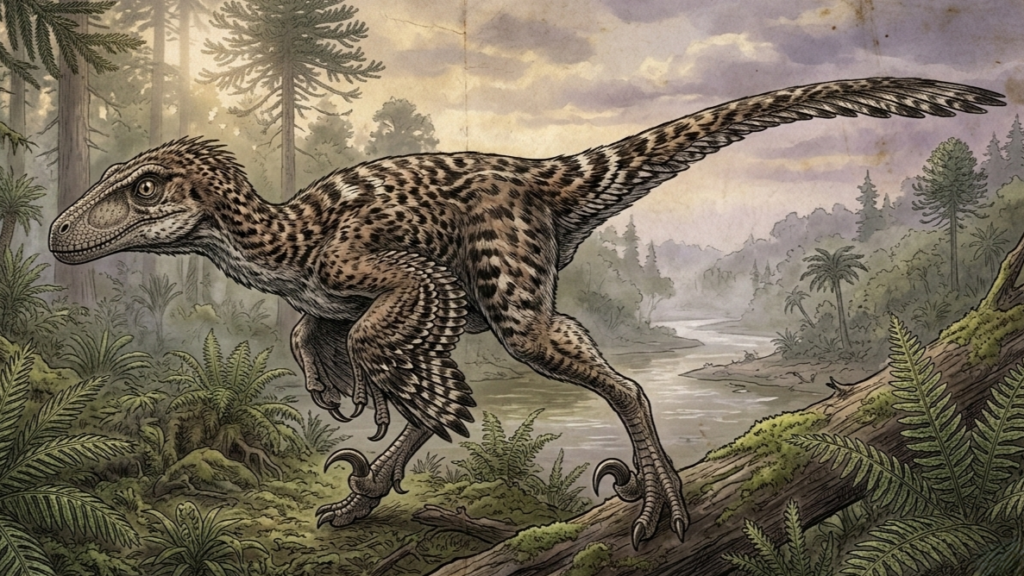
Discovered in 1969 by Yale paleontologist John Ostrom in Montana’s Cloverly Formation, Deinonychus antirrhopus was named for its fearsome curved claws. Measuring 11 feet from snout to tail and standing 5 feet at the hip, this 150-pound predator was built for speed and agility, with a stiffened tail for balance and powerful jaw muscles for gripping prey.
The smoking gun for its hunting prowess came from a massive bonebed in Wyoming, where multiple Deinonychus skeletons were found mingled with the remains of Tenontosaurus, a plant-eater up to 23 feet long. This suggests pack hunting, where these smart dinosaurs, with brains larger than most theropods, coordinated attacks on much larger foes.
Modern reconstructions give Deinonychus a feathered flair, with quill knobs on its bones hinting at plumage like today’s eagles. Ostrom’s work revived the dinosaur-bird link, paving the way for today’s feathered dino renaissance. Deinonychus was not just a killer, but a glimpse into the evolution of flight.