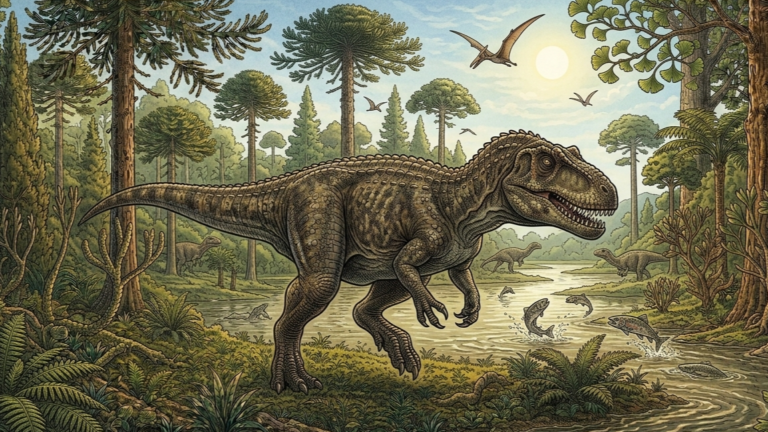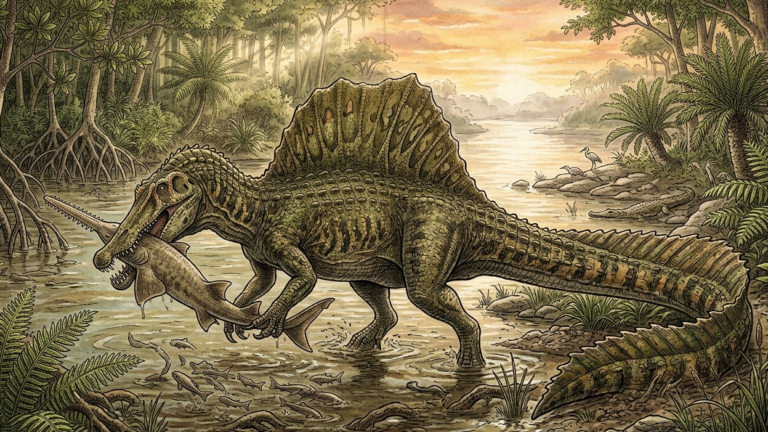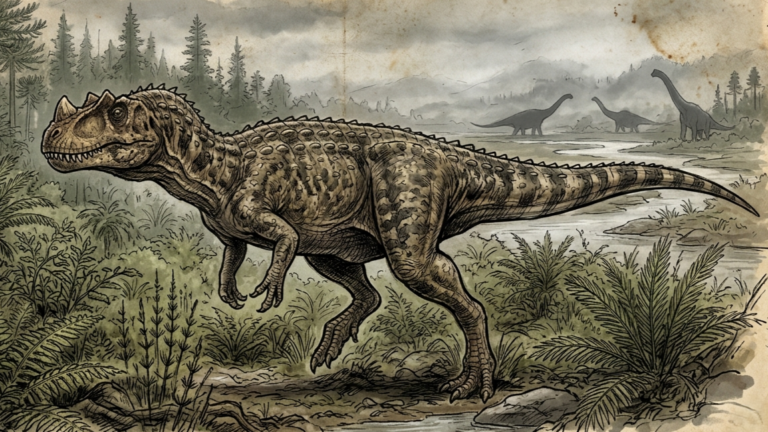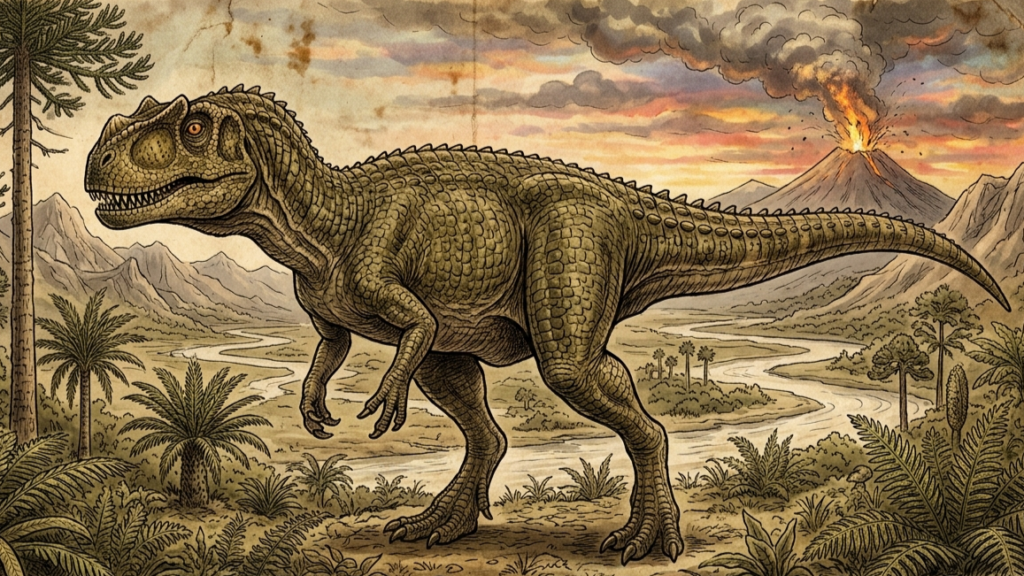
Deep in the lush, misty floodplains of Late Jurassic China prowled a beast that made other predators tremble: Yangchuanosaurus, Asia’s ultimate carnivorous colossus.
Unearthed in the 1970s near the Yangchuan Reservoir in Sichuan Province by Chinese paleontologists, the first species, Yangchuanosaurus shangyouensis, was described in 1978. Its discovery revealed a theropod with a massive skull packed with blade-like teeth designed for shredding flesh, and enormous hand claws perfect for slashing prey.
A second, even larger species, Yangchuanosaurus magnus, named in 1983, stretched up to 36 feet long with a build rivaling the fearsome Allosaurus of North America. This powerhouse likely ambushed sauropods and ornithopods in forested river valleys, using its powerful legs and tail for explosive attacks.
Modern analyses of its fossils show unique adaptations in its jaw muscles, allowing bone-crushing bites that set it apart from contemporaries, cementing Yangchuanosaurus as a dominant force in Jurassic Asia.