A massive 22-foot monster with blade-like horns has officially joined the dinosaur family tree! Roaming Montana 78 million years ago, Lokiceratops rangiformis is rewriting what we know about the golden age of horned dinosaurs.
The Discovery
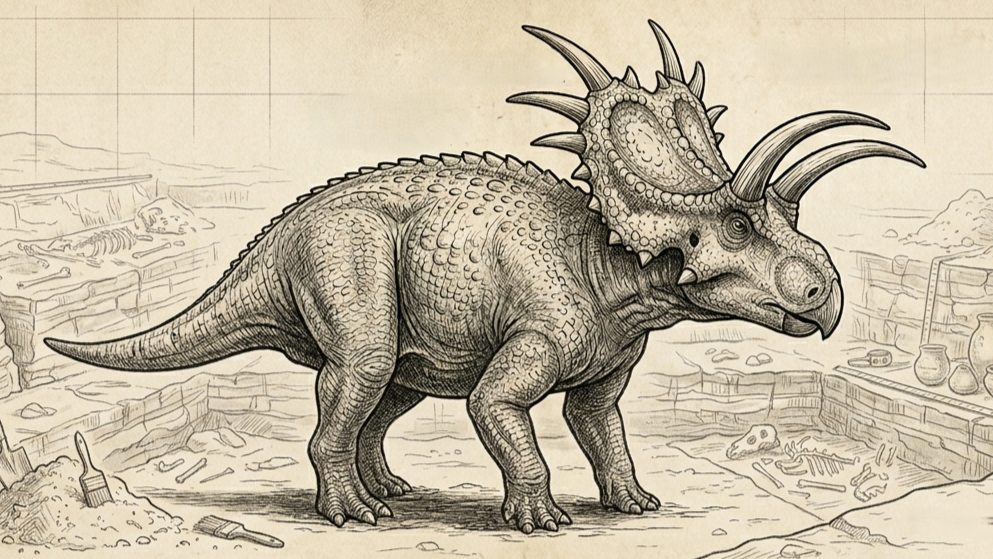
While the fossils were first unearthed in 2019 in the Judith River Formation, detailed analysis only recently revealed that this wasn’t just another known species—it was a unique giant. Weighing in at roughly 5 metric tons, it is the largest centrosaurine (a group of blunt-nosed horned dinos) ever discovered in North America.
What Makes It Unique?
The Loki Connection: Its name honors the Norse trickster god because of the two massive, curving blades on the top of its frill that resemble Loki’s iconic horned helmet.
The “Reindeer” Twist: The second part of its name, rangiformis, refers to its asymmetrical frill spikes, which look a bit like the mismatched antlers of a caribou.
The Missing Horn: Surprisingly, despite its massive brow horns, Lokiceratops had no nose horn at all!
A Crowded Neighborhood
One of the most mind-blowing parts of this discovery is that Lokiceratops wasn’t alone. It lived alongside four other species of horned dinosaurs in the same swampy ecosystem.
Previously, we thought only two or three species could coexist, but this find suggests that these dinosaurs were evolving unique “headgear” at a rapid pace—not just for defense, but as status symbols to recognize their own kind, much like the colorful feathers of modern birds.