Imagine stumbling upon the first nearly complete dinosaur skeleton ever found in North America, right in your backyard. That is exactly what happened in 1858 when William Parker Foulke unearthed Hadrosaurus foulkii in Haddonfield, New Jersey. This groundbreaking discovery, named by paleontologist Joseph Leidy, revolutionized our understanding of dinosaurs and sparked a paleontological frenzy across the world.
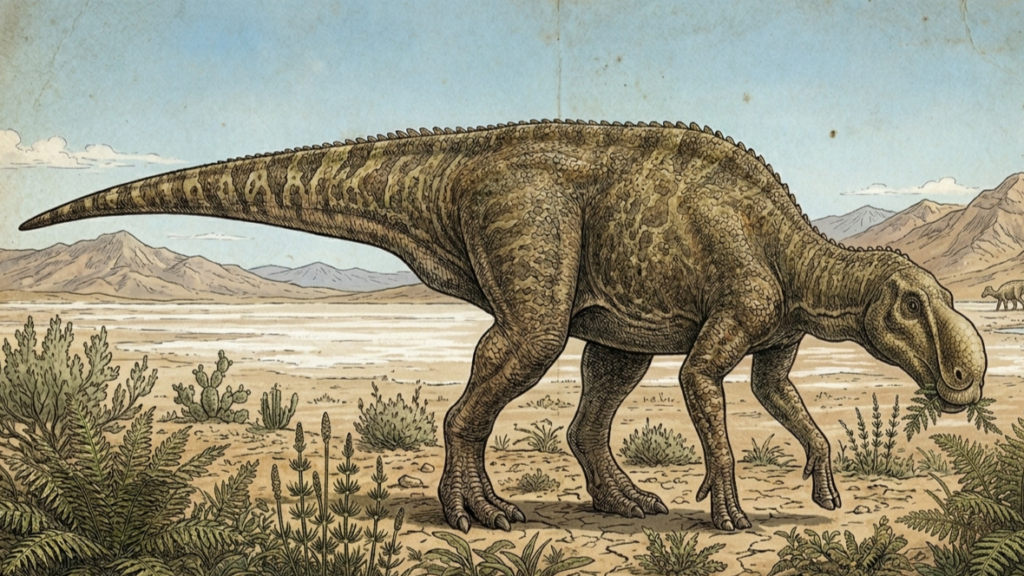
Hadrosaurus was a duck-billed dinosaur, famous for its broad, flattened beak perfect for cropping vegetation. Standing about 13 feet tall at the shoulder and stretching 26 feet long, it could switch between walking on two legs for speed or four for grazing. Skin impressions from the fossil revealed a mix of scales and tubercles, hinting at a textured hide that may have provided camouflage in its coastal floodplain home.
Living around 80 million years ago during the Campanian stage of the Late Cretaceous, Hadrosaurus thrived in what is now the eastern United States. As a member of the hadrosaur family, it likely lived in herds, using keen senses and possibly even complex vocalizations produced by nasal passages to communicate. Fossils show evidence of healed injuries, suggesting these gentle giants faced predators like tyrannosaurs but fought back fiercely.
Today, Hadrosaurus remains a cornerstone of American paleontology, with its mount in the Philadelphia Academy of Natural Sciences drawing crowds since 1868. Recent studies continue to reveal more about its life, from growth rates to locomotion, keeping this heavy lizard at the heart of dinosaur science.