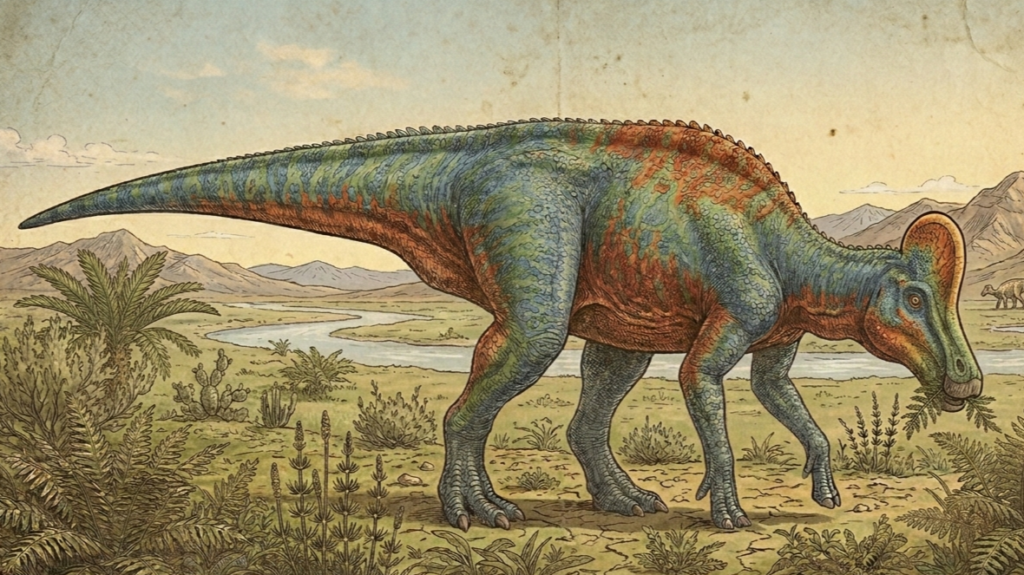
Picture a duck-billed dinosaur sporting a bizarre, helmet-shaped crest that looks straight out of ancient Greek armor. That’s Corythosaurus, the Cretaceous superstar whose name means ‘helmet lizard’ and whose fossils have captivated scientists for over a century.
Discovered in 1912 by the legendary fossil hunter Barnum Brown along the Red Deer River in Alberta, Canada, Corythosaurus quickly became a star of the American Museum of Natural History’s collections. Named in 1914 by Canadian paleontologist Lawrence Lambe, this hadrosaur was found in the Dinosaur Park Formation, a treasure trove of Late Cretaceous life. Remarkably, over 20 individuals have been unearthed, including some with preserved skin impressions revealing a pebbly texture like that of modern lizards.
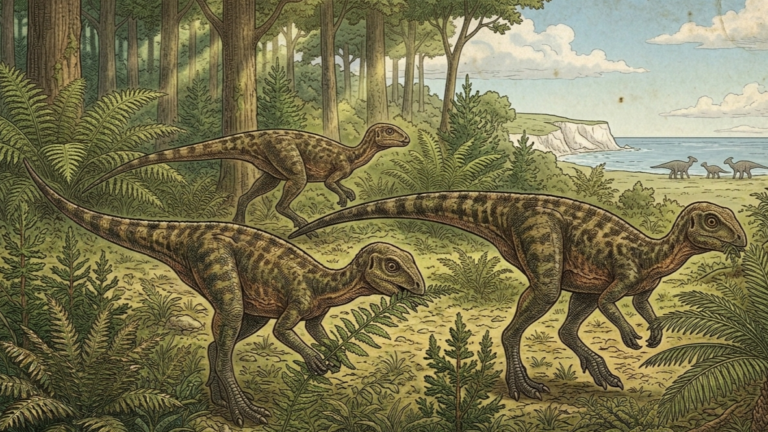
What was that wild crest for? Early theories suggested it acted like a snorkel, but modern research points to display and vocal resonance, possibly amplifying calls like a natural trombone across the floodplains. These herd-dwelling herbivores munched on conifers and ferns, browsing low to the ground with their specialized beaks.
Recent studies continue to reveal more: isotopic analysis of teeth shows a diet rich in tougher plants, and trackways suggest they lived in massive groups for protection. Corythosaurus reminds us how diverse and dynamic dinosaur societies were, right up until the end of the Cretaceous.