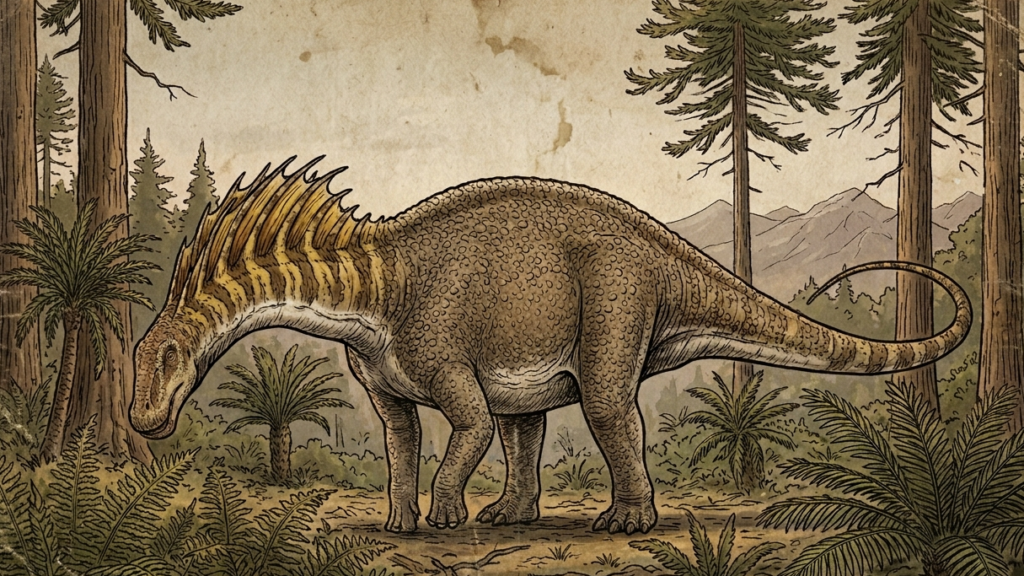
Picture a long-necked dinosaur rocking massive, blade-like spines along its neck and back, turning heads in the ancient floodplains of Patagonia. This is Amargasaurus, a bizarre sauropod that redefined what we thought we knew about these giants.
Discovered in 1984 by rancher Guillermo Heredia near the Rio Limay in Neuquen Province, Argentina, the fossils were excavated and named in 1991 by paleontologist Jose F. Bonaparte. The name honors the nearby Arroyo La Amarga, meaning bitter stream. Only one specimen is known, preserving about 47 percent of the skeleton, including those extraordinary neural spines that stretched up to 65 cm tall and bifurcated at the ends.
These spines remain a mystery. Theories suggest they supported a sail for display or thermoregulation, or perhaps expanded as a defensive frill when threatened. Amargasaurus belonged to the unusual Dicraeosauridae family, known for shorter necks compared to typical sauropods, adapted for browsing mid-level vegetation in conifer-dominated forests.
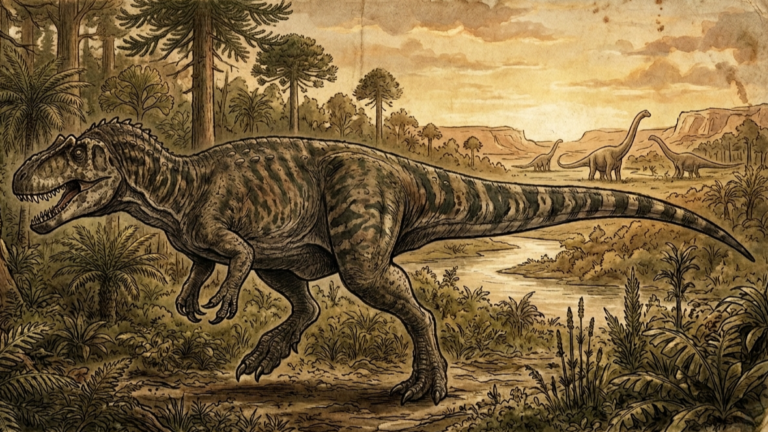
Living around 129 to 125 million years ago during the Barremian stage, this herbivore likely munched on ferns and cycads, sharing its world with rebbachisaurids and allosaurs. Its unique build challenges our views on sauropod diversity, proving these giants came in all shapes and sizes.