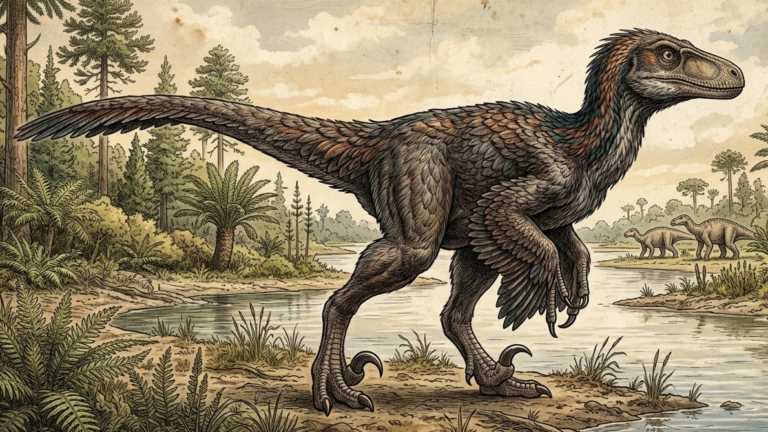
Picture this: two dinosaurs frozen in a dramatic death grip, jaws clamped on each other after 75 million years. This iconic fossil, discovered in Mongolia’s Gobi Desert, captures a Protoceratops locked in battle with a Velociraptor, revealing the fierce interactions of the Late Cretaceous.
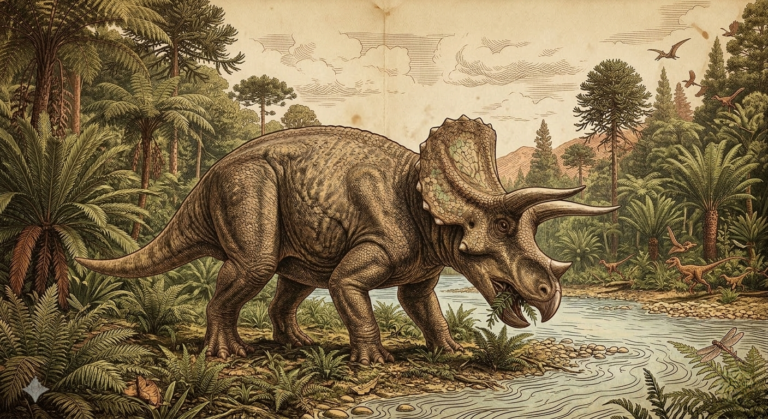
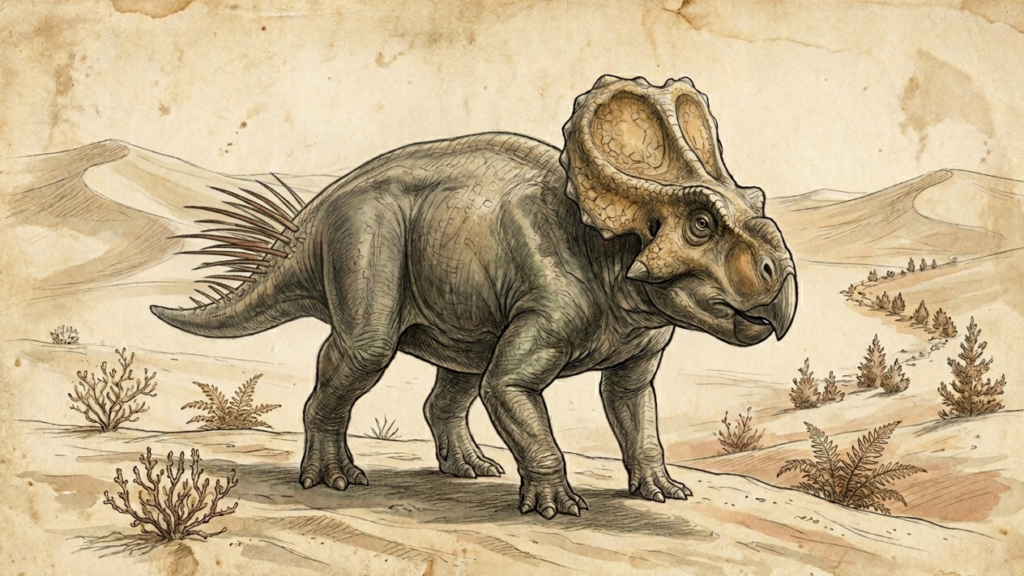
Named Protoceratops andrewsi in 1923 by Walter Granger and William Diller Matthew, it honors the expedition leader Roy Chapman Andrews, whose 1922 Central Asiatic Expeditions unearthed troves of these ceratopsians in the Djadochta Formation. Unlike later horned giants like Triceratops, Protoceratops lacked true horns but sported a prominent bony frill and a powerful parrot-like beak for shearing tough plants.
Hundreds of specimens, including adults, juveniles, and even nest sites, have been found, shedding light on their social behavior and growth. Early misconceptions labeled egg-stealing Oviraptors as such near Protoceratops nests, but modern analysis shows those eggs belonged to oviraptorids, flipping the narrative on ancient predator-prey dynamics.
With large eyes suggesting keen night vision and a frill likely used for display or thermoregulation, Protoceratops thrived in arid, dune-filled environments, browsing on low shrubs and ferns. These pint-sized ceratopsians offer a window into the evolution of horned dinosaurs.