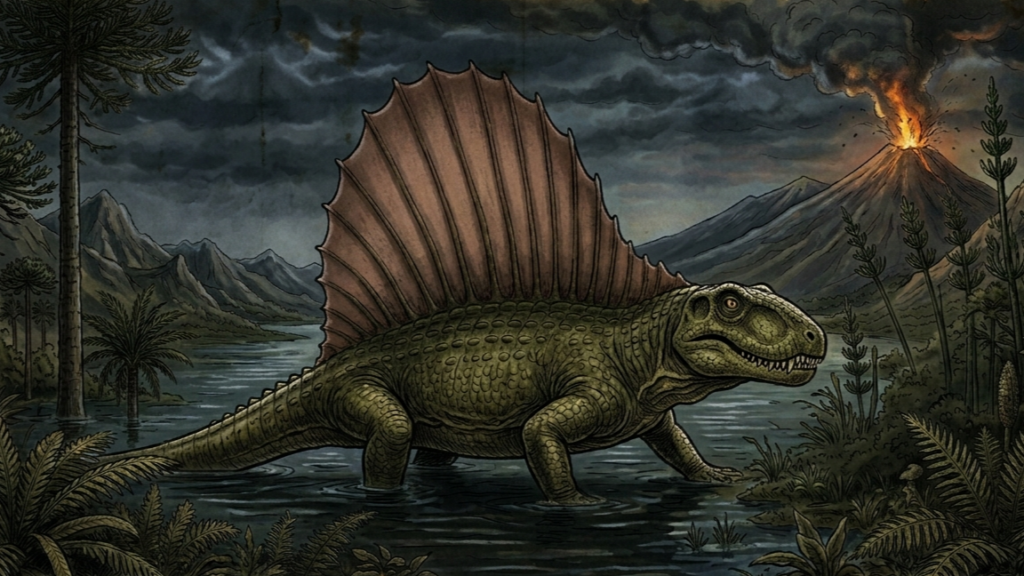
Picture this: a fierce predator with a massive sail rising from its back, dominating the ancient swamps long before the age of dinosaurs. Meet Dimetrodon, the iconic sail-backed beast that’s often mistaken for a dinosaur but actually belongs to the synapsids, the group that gave rise to mammals.
Discovered in the late 19th century, Dimetrodon was first described by paleontologist Edward Drinker Cope in 1877 from fossils unearthed in the red beds of Texas. These early Permian rocks, dating back 295 to 272 million years, have yielded thousands of Dimetrodon specimens, making it one of the most well-known prehistoric animals.
What made Dimetrodon stand out was its dorsal sail, supported by elongated neural spines. Scientists debate its purpose – was it for regulating body temperature, like a built-in solar panel, or for intimidating rivals and attracting mates? As a carnivore, it preyed on smaller animals using its serrated teeth designed for slicing flesh.
Recent studies continue to reveal more about Dimetrodon’s life. Isotope analysis of its teeth shows it was a top predator, and growth rings indicate it grew rapidly. Far from a dinosaur, Dimetrodon reminds us of the diverse and dramatic world of the Paleozoic era.
Note: As mentioned, the Dimetrodon was technically not a dinosaur. However, I’ve decided to include it in my dinosaur encyclopedia anyway because it’s widely recognized as closely associated with popular dinosaurs.