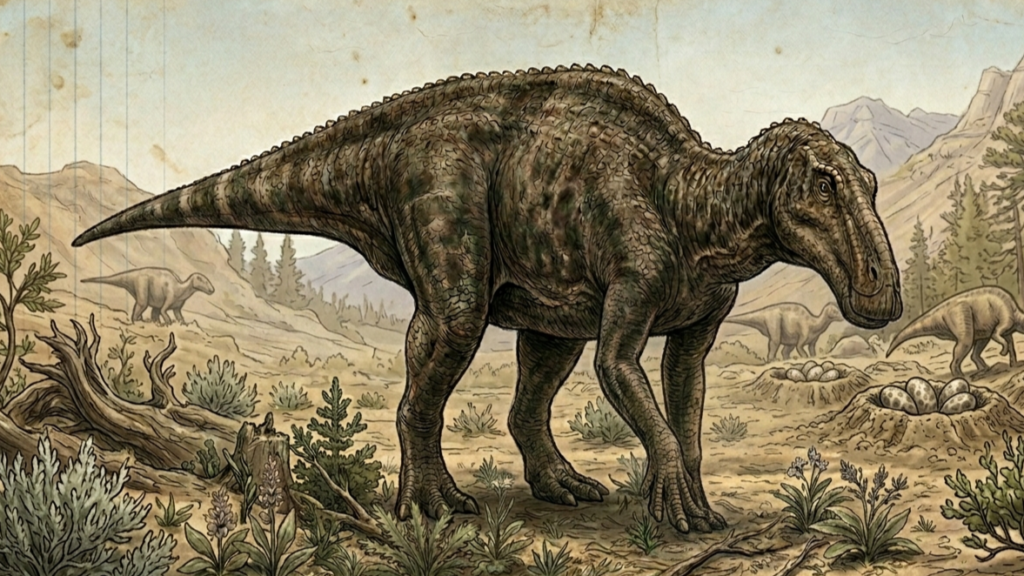
Picture this: a massive duck-billed dinosaur carefully guarding its nest filled with eggs and hatchlings, proving that parental care existed 80 million years ago. This is Maiasaura, the reptile that rewrote our understanding of dinosaur family life.
In 1978, while exploring the rugged badlands of Montana’s Two Medicine Formation, field assistant Marion Brandvold stumbled upon a quarry teeming with over 40 nests. Each nest contained eggshells, baby skeletons, and even semi-digested plant matter in the stomachs of the young, showing adults regurgitated food for their offspring. Paleontologists Jack Horner and Robert Makela named it Maiasaura peeblesorum, from ‘maia’ meaning good mother in Greek, honoring this nurturing behavior.
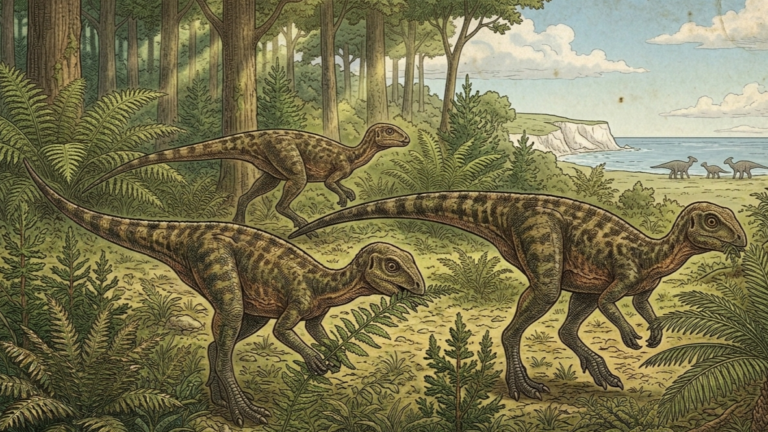
These herbivores grew fast, reaching full size in just a few years, as revealed by bone growth rings. They lived in vast herds, roaming lush floodplains lined with ferns, horsetails, and conifers. Recent studies confirm Maiasaura’s nests were arranged in colonies, mimicking modern seabird rookeries, and the babies stayed in the nest for up to a year under parental watch.
Maiasaura’s legacy endures through museum mounts and ongoing digs, reminding us dinosaurs were more like us than we ever imagined.