In 1822, a Sussex doctor named Gideon Mantell stumbled upon a massive fossilized tooth while walking with his wife. Mistaking it at first for an oversized iguana tooth, he realized it belonged to an enormous extinct reptile, naming it Iguanodon in 1825. This discovery made Iguanodon one of the very first dinosaurs to be scientifically described, sparking the world of paleontology.
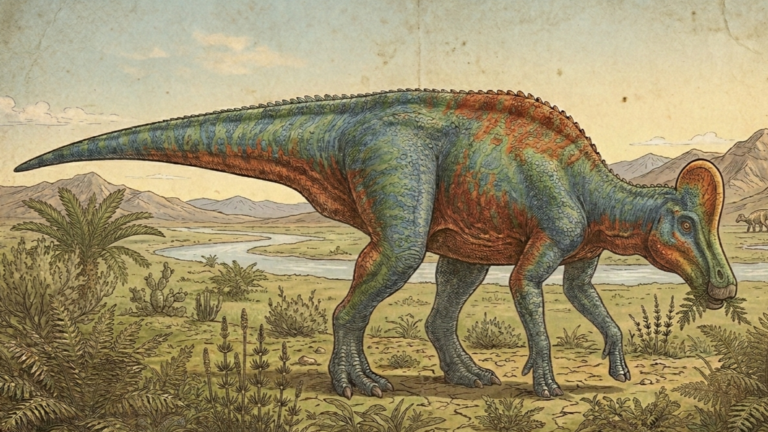
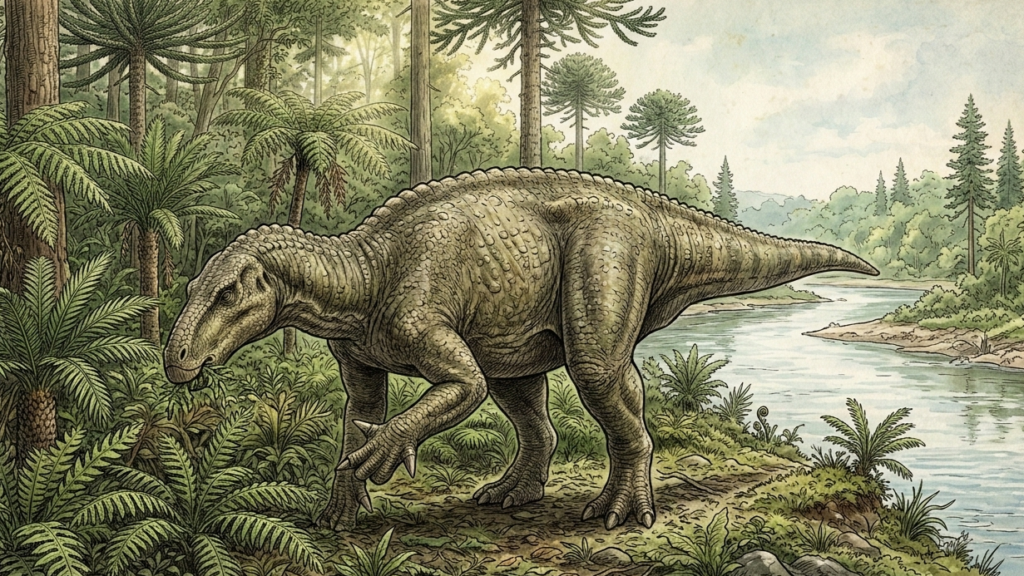
The real breakthrough came in 1878 when miners in Bernissart, Belgium, uncovered 29 nearly complete Iguanodon skeletons from a collapsed sinkhole, preserved in remarkable detail. These fossils revealed a bulky, herbivorous dinosaur that could switch between walking on two legs or all fours, equipped with distinctive thumb spikes for defense or foraging. Ranging up to 33 feet long, these gentle giants browsed on tough vegetation using a beak-like mouth and grinding teeth.
Early reconstructions famously erred, like the Victorian statues at Crystal Palace depicting Iguanodon with a horn on its nose. Modern understanding paints it as a social animal, possibly living in herds, with evidence from trackways suggesting group behavior. Iguanodon’s legacy endures as a foundational species in dinosaur science, bridging the gap between early finds and today’s sophisticated studies.